8 hr
Wahiba Sands Desert and Wadi Bani Khalid Day Trip
- Expert local guide
- Small group
- Skip-the-line access
- Free cancellation
Desert Camp Oman — Wahiba Sands Day Safaris & Wadi Adventures
Golden dunes meet ancient Bedouin routes, where silence stretches to the horizon
Compare fares, pick the fit — all bookings are mobile-voucher and eligible for free cancellation where shown.
8 hr
10 hr
10 hr
| Experience | Duration | Rating | Pickup | Skip-the-line | Guide | Small group | Price | |
|---|---|---|---|---|---|---|---|---|
|
Guided Experience
Most popular
Wahiba Sands Desert and Wadi Bani Khalid Day Trip
|
8 hr | ★ 4.8 | ✓ | ✓ | ✓ | ✓ | $130 | Book → |
|
Guided Experience
Wahiba Sands, Wadi Bani Khalid & Mudayrib Desert Adventure
|
10 hr | ★ 4.7 | ✓ | ✓ | ✓ | ✓ | €97 | Book → |
|
Guided Experience
Wahiba Sands Desert & Wadi Bani Khalid Oasis Adventure
|
10 hr | ★ 4.8 | ✓ | ✓ | ✓ | ✓ | €114 | Book → |
Worth it for adventure seekers and desert enthusiasts
A desert camp Oman experience in Wahiba Sands delivers genuine value through accessible wilderness immersion without requiring multi-day expeditions. The available day trips bundle dune landscapes with Wadi Bani Khalid's freshwater pools, creating a balanced desert-oasis itinerary that maximizes the Sharqiyah region's contrasts in a single outing. Entry to the Wahiba Sands themselves carries no fee, but guided tours provide essential 4×4 access across rolling amber dunes and handle logistics that independent travelers would struggle with. Most packages include lunch and handle the 2.5-hour drive from Muscat, removing the burden of desert navigation. The experience suits travelers who want Bedouin encounters and dune photography without committing to overnight camping. Value peaks for visitors combining both geological features in one trip rather than paying for separate Wahiba Sands tours and wadi excursions. Those seeking sterile comfort or averse to sand and heat should reconsider.
Bottom line: Desert camp oman tickets deliver solid value for travelers prioritizing authentic desert access over luxury amenities, especially when pairing dunes with wadi swimming in a single efficient itinerary.
Hand-picked experiences loved by thousands of travelers
9 hours
Free Cancellation
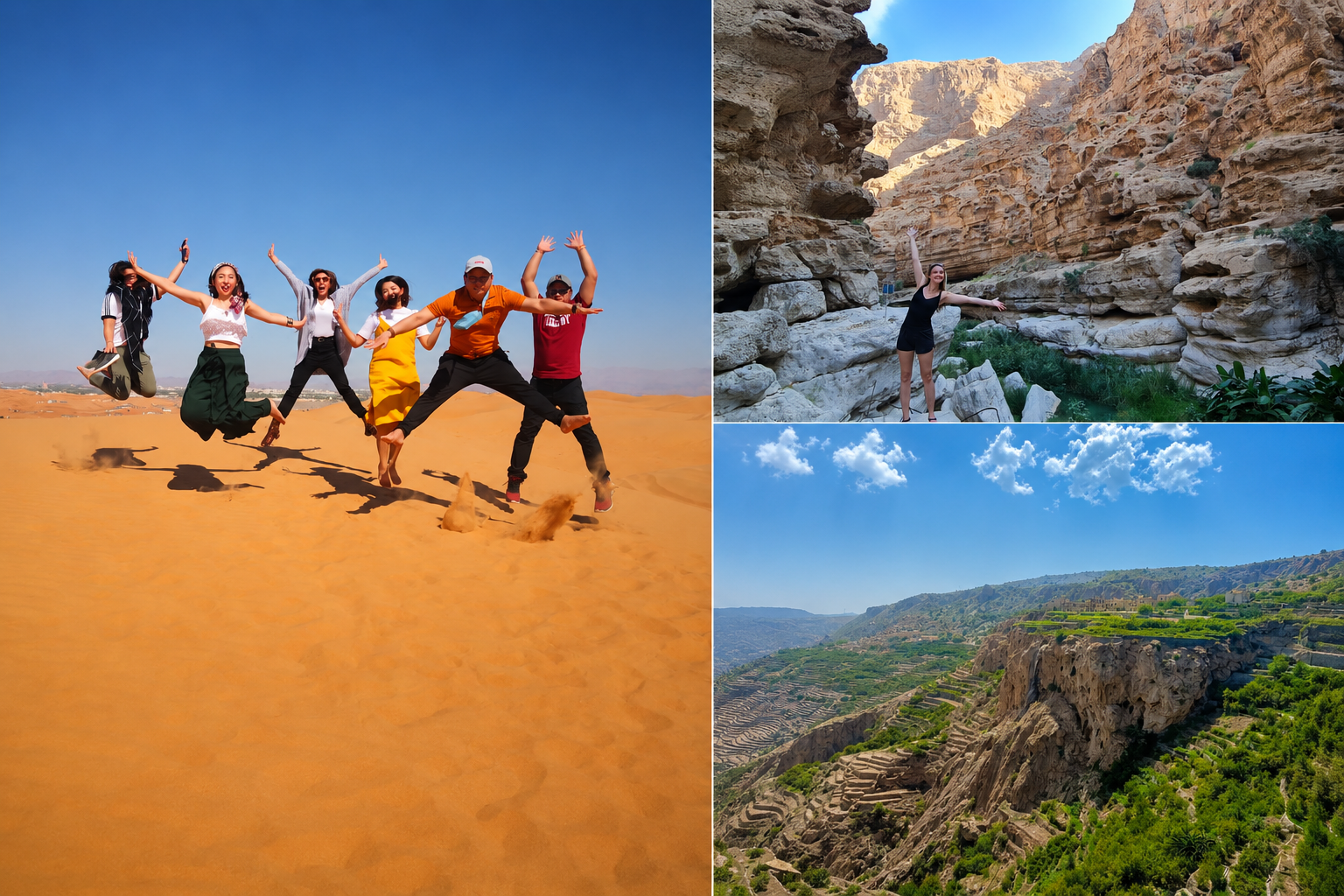
Experience thrilling desert dunes and swim in turquoise oasis pools on this full-day adventure from Muscat
9 hours
Free Cancellation
Journey through golden dunes and emerald pools on this full-day Omani desert and oasis experience
1 hour
Free Cancellation
Pilot your own buggy across Oman's iconic sand dunes or ride shotgun for a thrilling desert expedition
Full day experience
Free Cancellation
Explore Oman's golden dunes, swim in desert oases, and witness spectacular sunsets over endless sands
2 days
Free Cancellation
Overnight desert camping, crystal-clear canyon pools, and Oman's stunning eastern coast in one epic trip
2 days
Free Cancellation
Discover sinkholes, dramatic wadis, and golden dunes on a guided overnight journey through Oman's landscapes
3 days
Free Cancellation
Discover Oman's wadis, beaches, and desert dunes on this exclusive three-day journey with accommodation
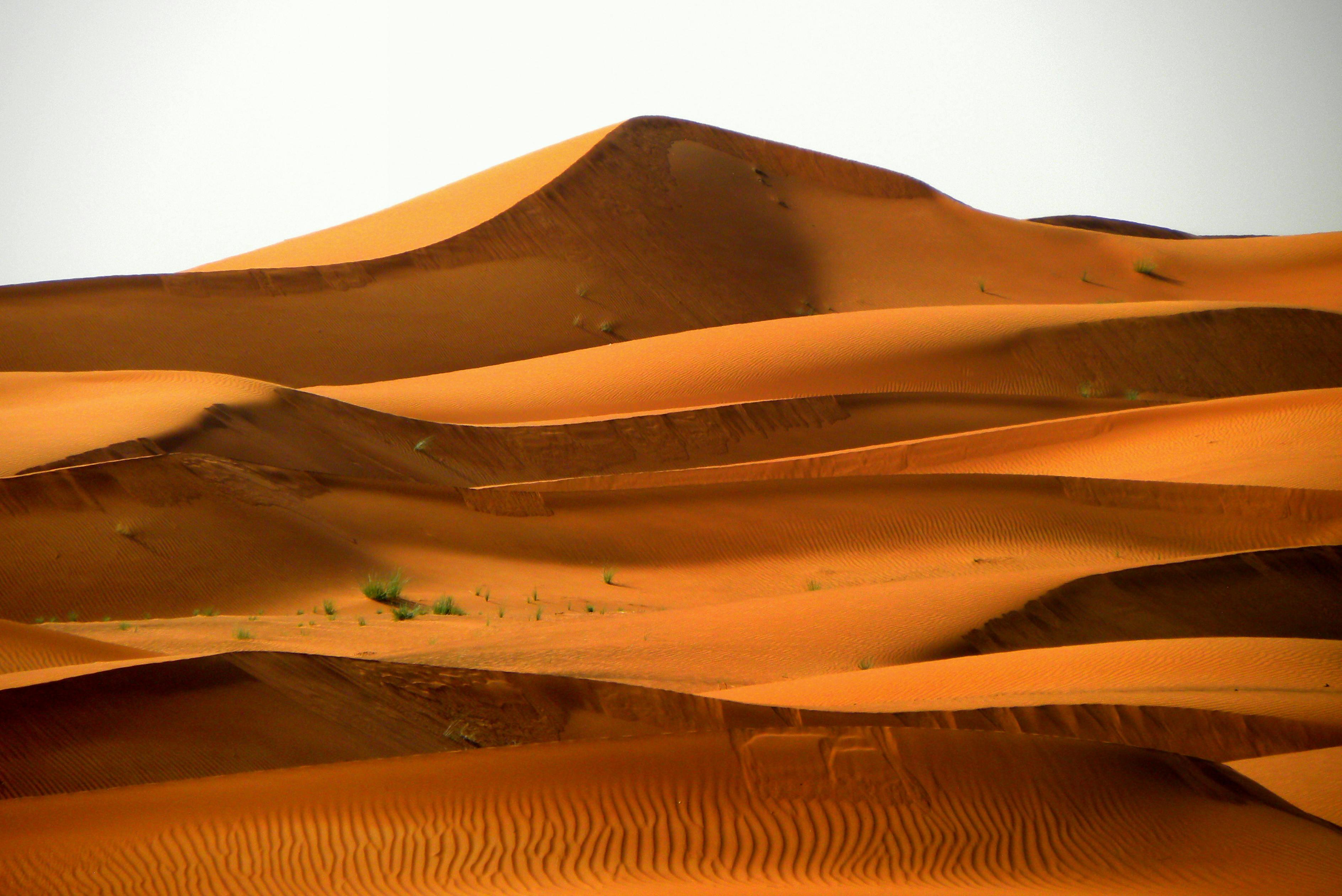
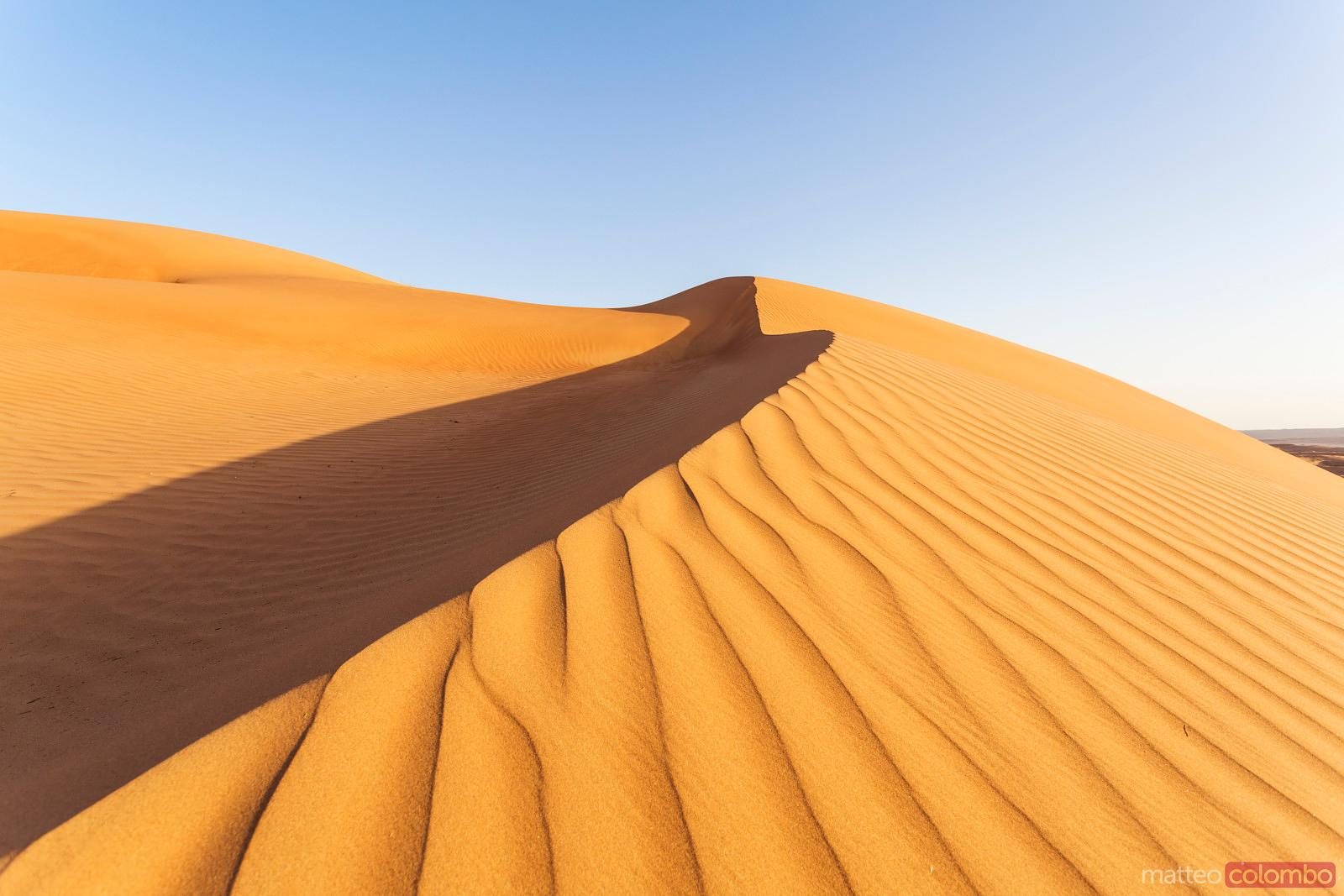
High, wind-swept sand formations perfect for photography
4WD Adventure Tracks
Stargazing Point
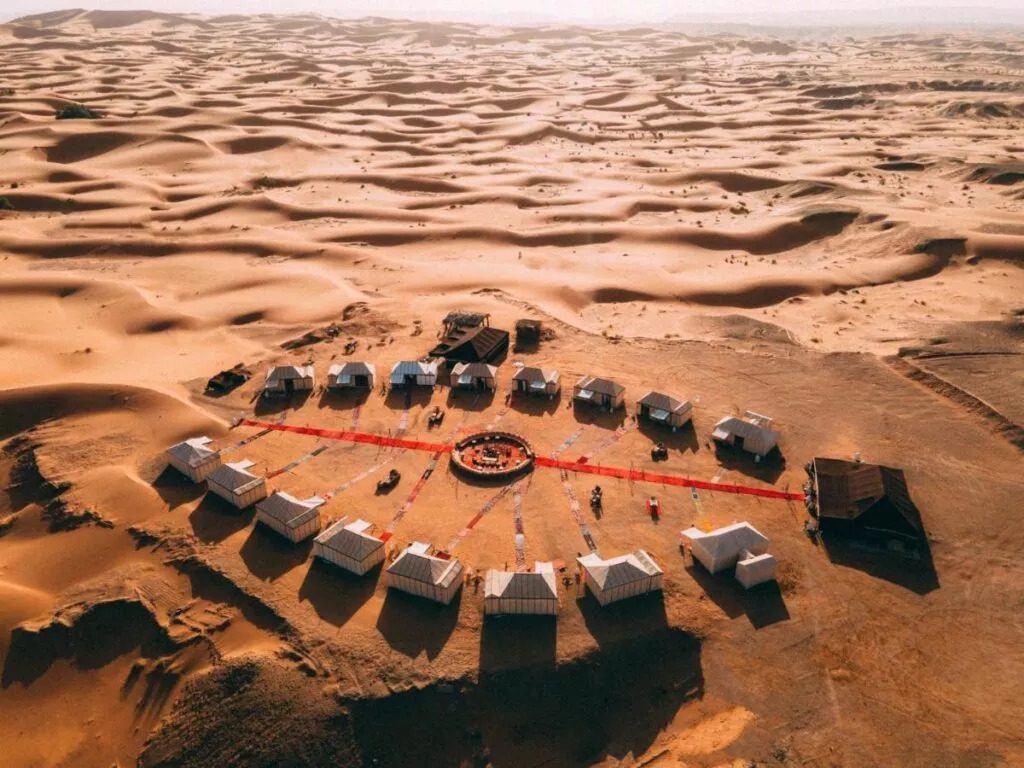
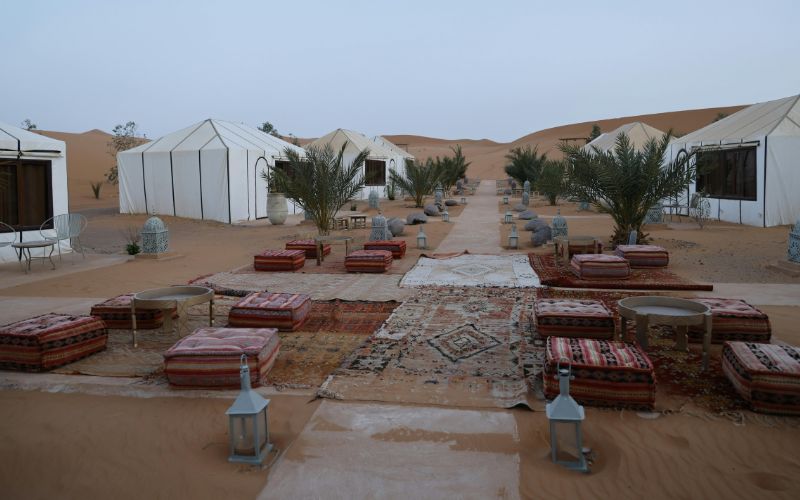
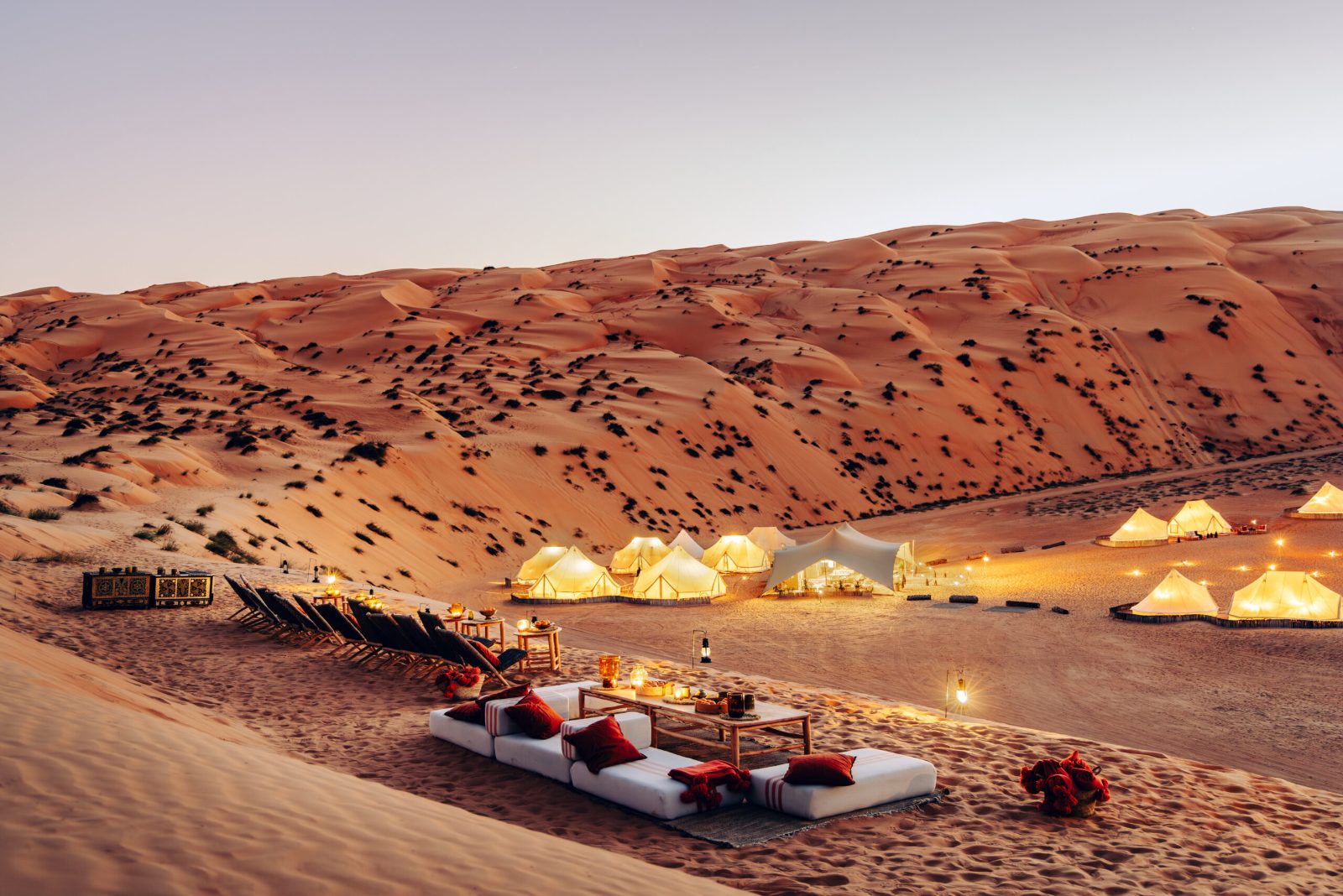
Bedouin Camp Layout
Sunset Viewing Spot
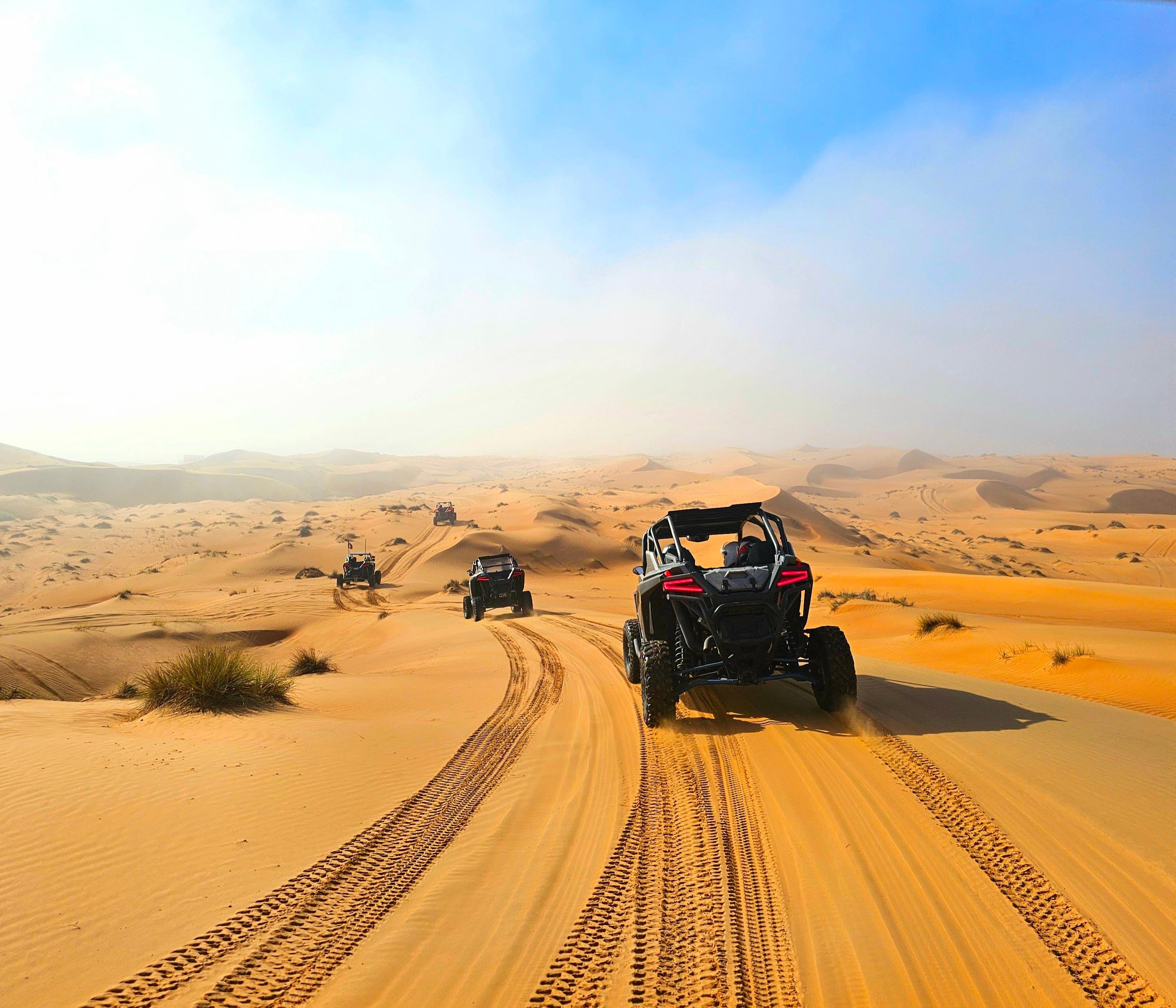
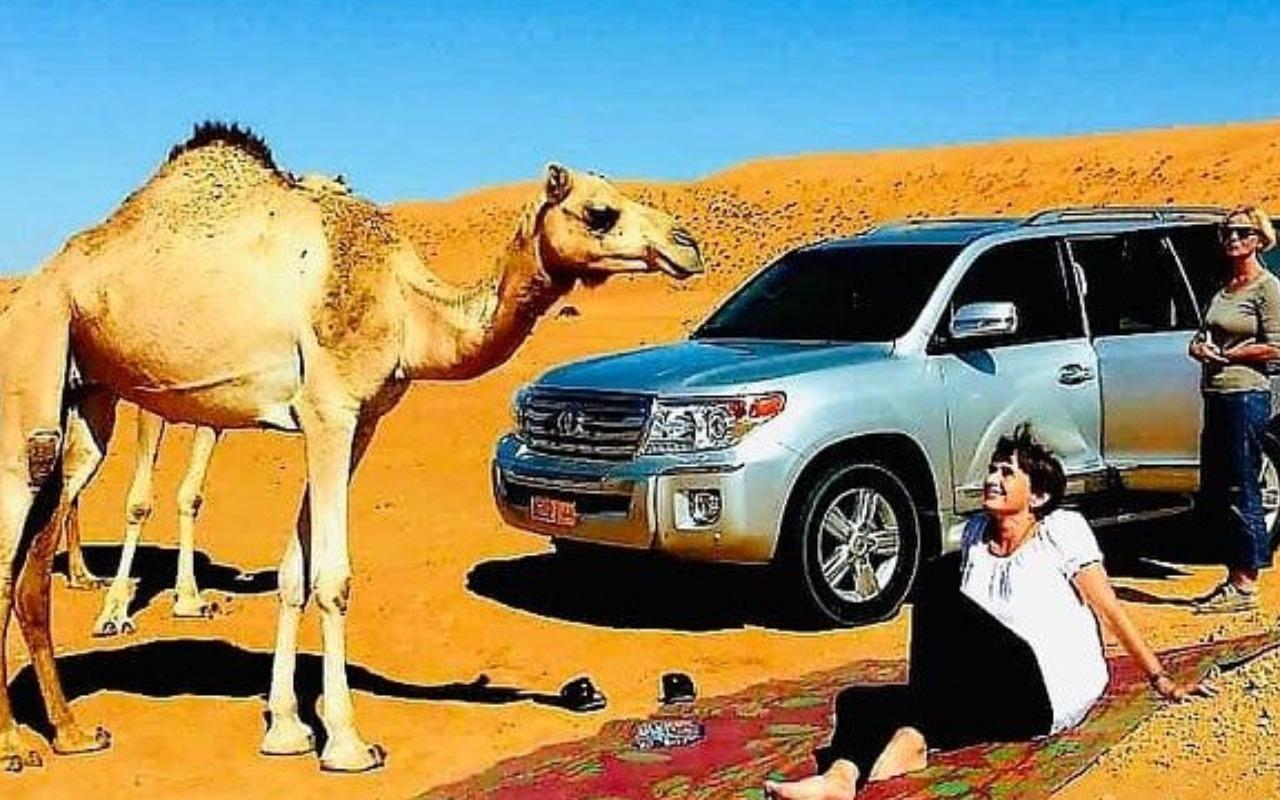
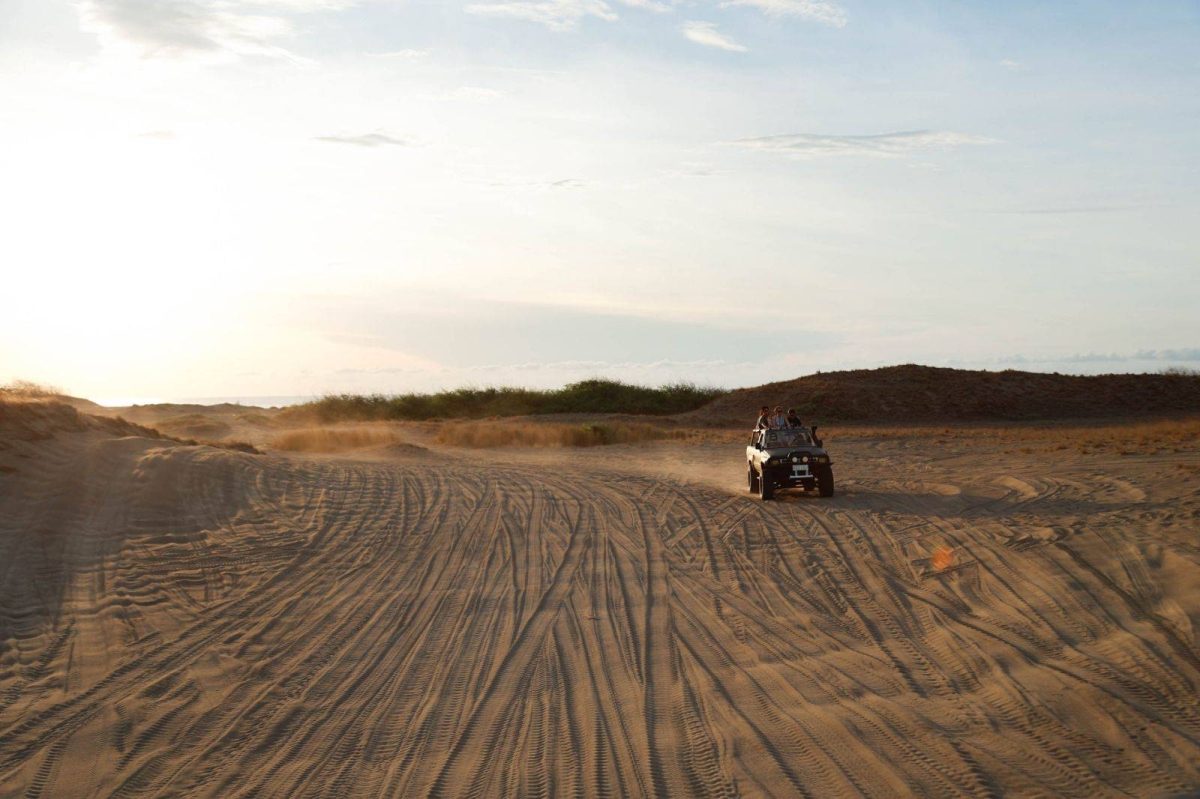
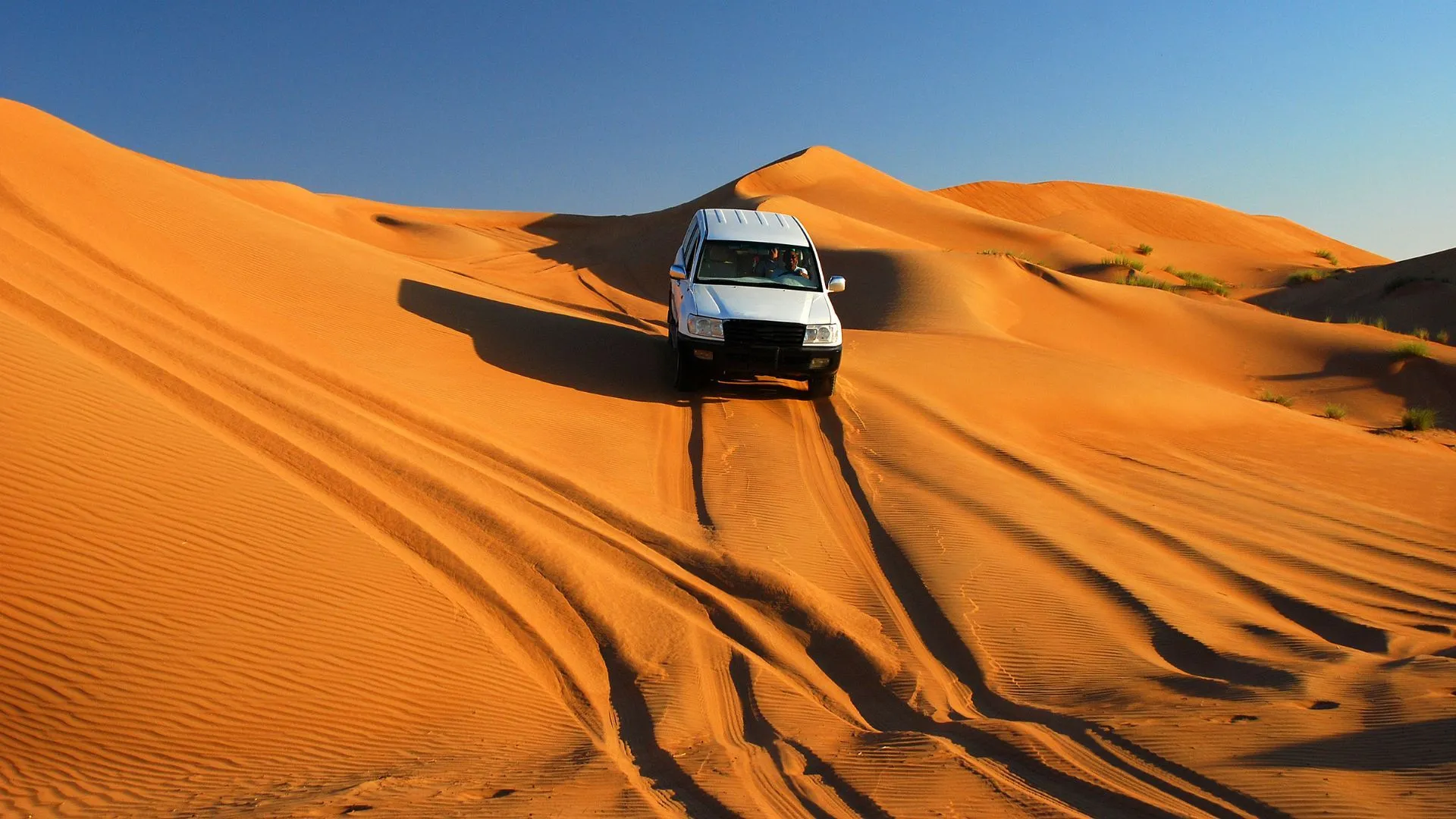
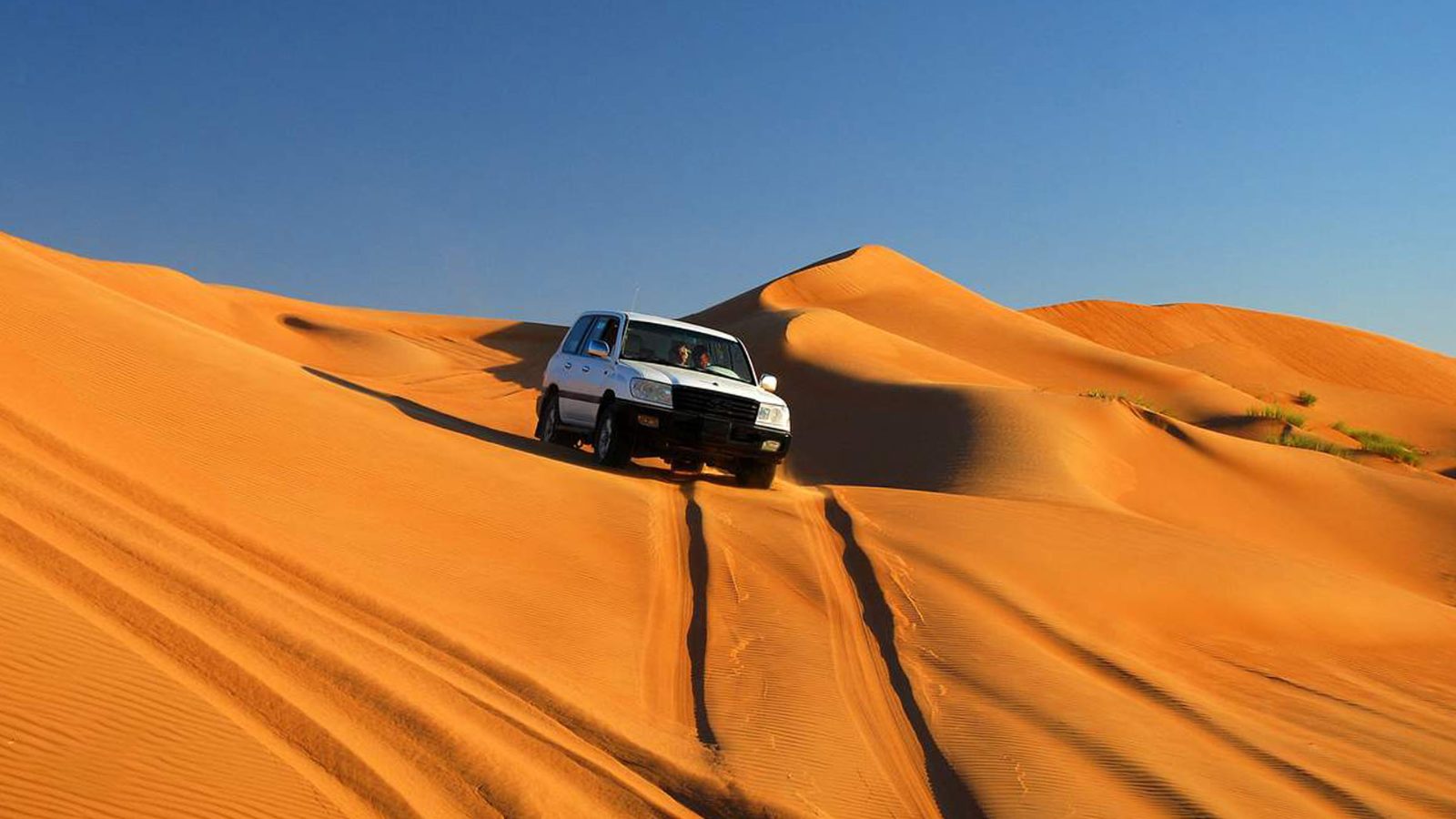
You depart Muscat before dawn, reaching the desert's paved threshold as early light washes the dunes amber. Your 4x4 deflates its tires at the transition point, then climbs the first ridge in low gear, sand hissing against the undercarriage.
At the summit you pause: a sea of ridges extends east, each crest knife-edged against the sky.
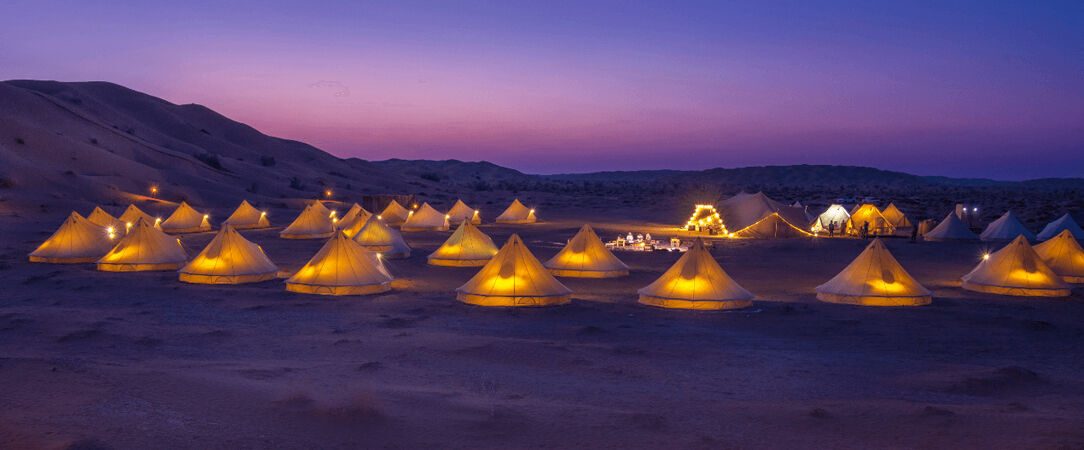
Your driver navigates by GPS and instinct, threading valleys where the sand firms near subsurface clay layers. Forty minutes in, you reach a Bedouin camp where canvas majlis tents face the morning sun. Coffee arrives in small handleless cups, cardamom-scented and bitter. You walk the nearest dune barefoot, the sand cool at depth, and photograph the ripple patterns that reset each night.
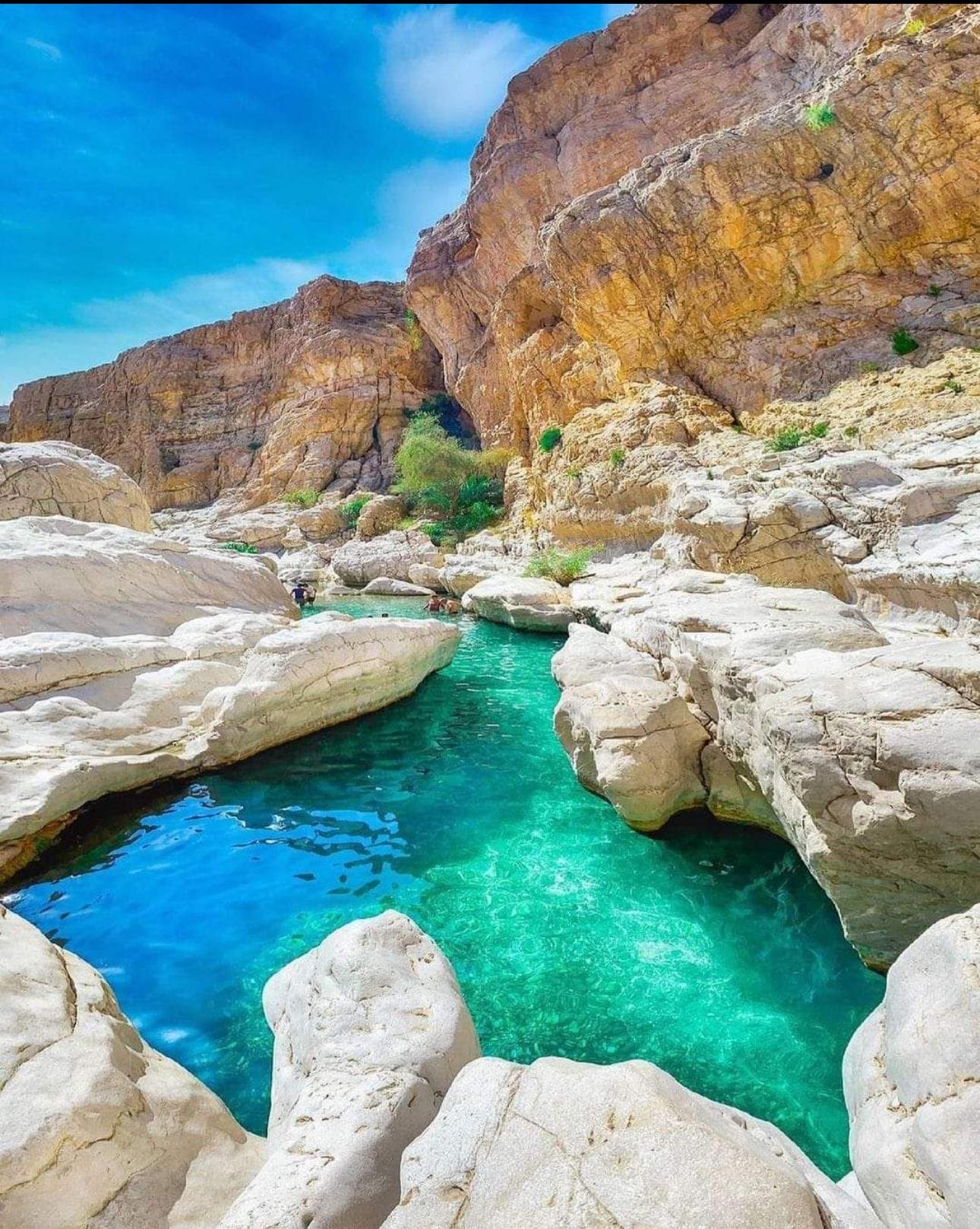
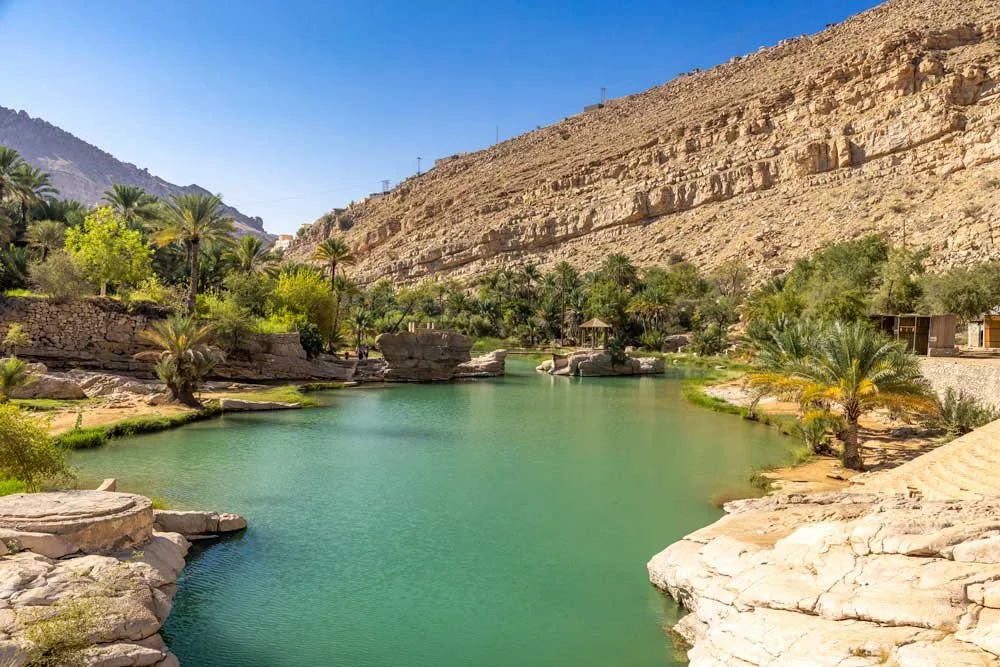
Mid-morning you continue west to Wadi Bani Khalid, descending from sand to limestone. The wadi appears suddenly, a green slot canyon where spring water pools beneath overhanging rock. You wade into the first basin, clear enough to count pebbles at two meters' depth. Lunch is served under palm shade before the return drive, timing your arrival at the dunes for late afternoon when shadows lengthen across every ridge and the temperature drops ten degrees in an hour.
All the details about your upcoming adventure in one place
The Wahiba Sands stretch across 12,500 square kilometers of the Ash-Sharqiyah region, their rust-colored ridges rising to 100 meters in places where wind sculpts the terrain daily.
Named after the Bani Wahiba tribe who have navigated these dunes for centuries, the desert became a focal point for scientific study in 1986 when the Royal Geographical Society conducted a comprehensive survey mapping its ecology, geology, and human settlement patterns. The research documented 16,000 invertebrate species, 200 plant varieties adapted to arid conditions, and the seasonal migration routes still followed by Bedouin families.
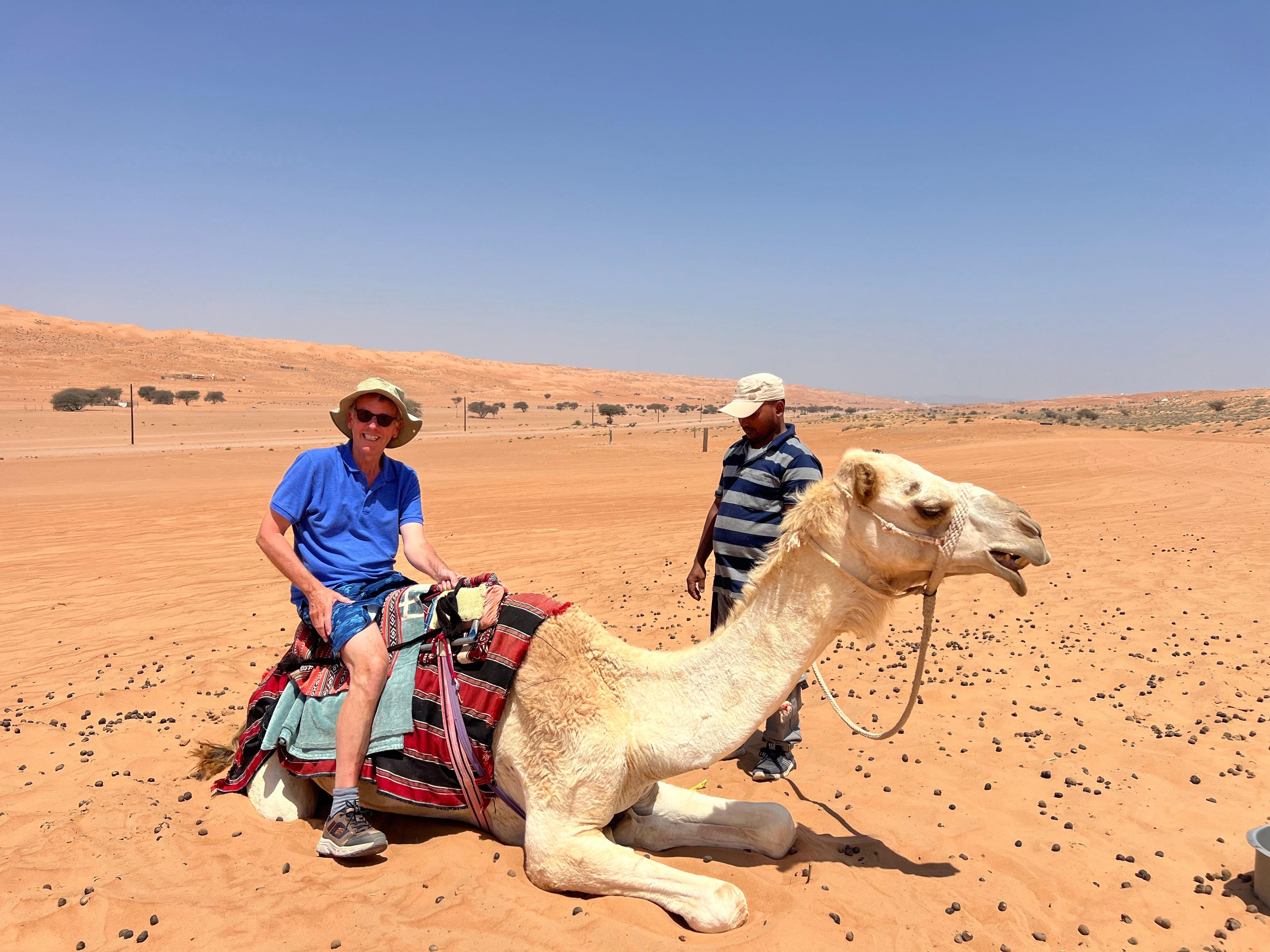
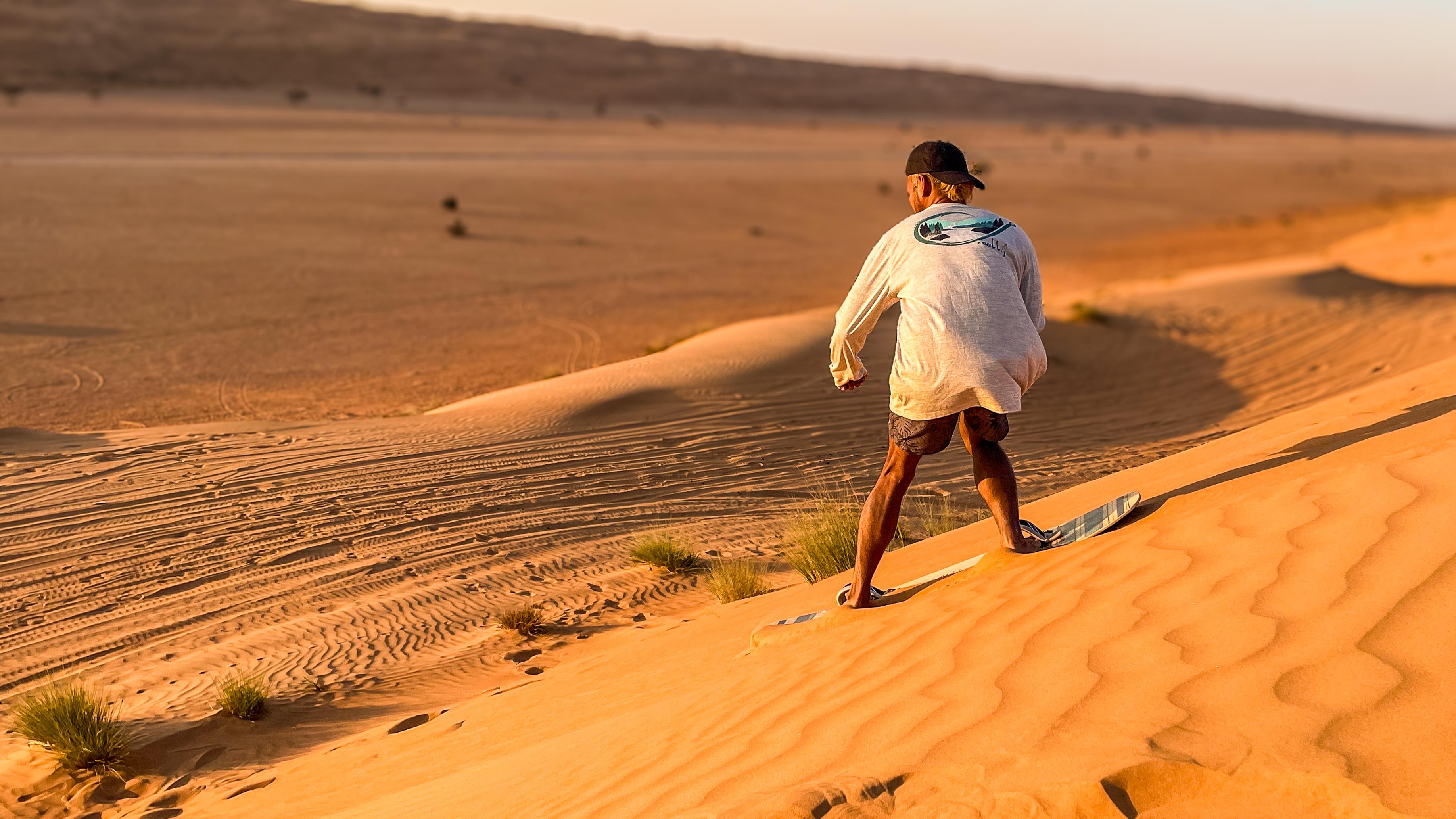
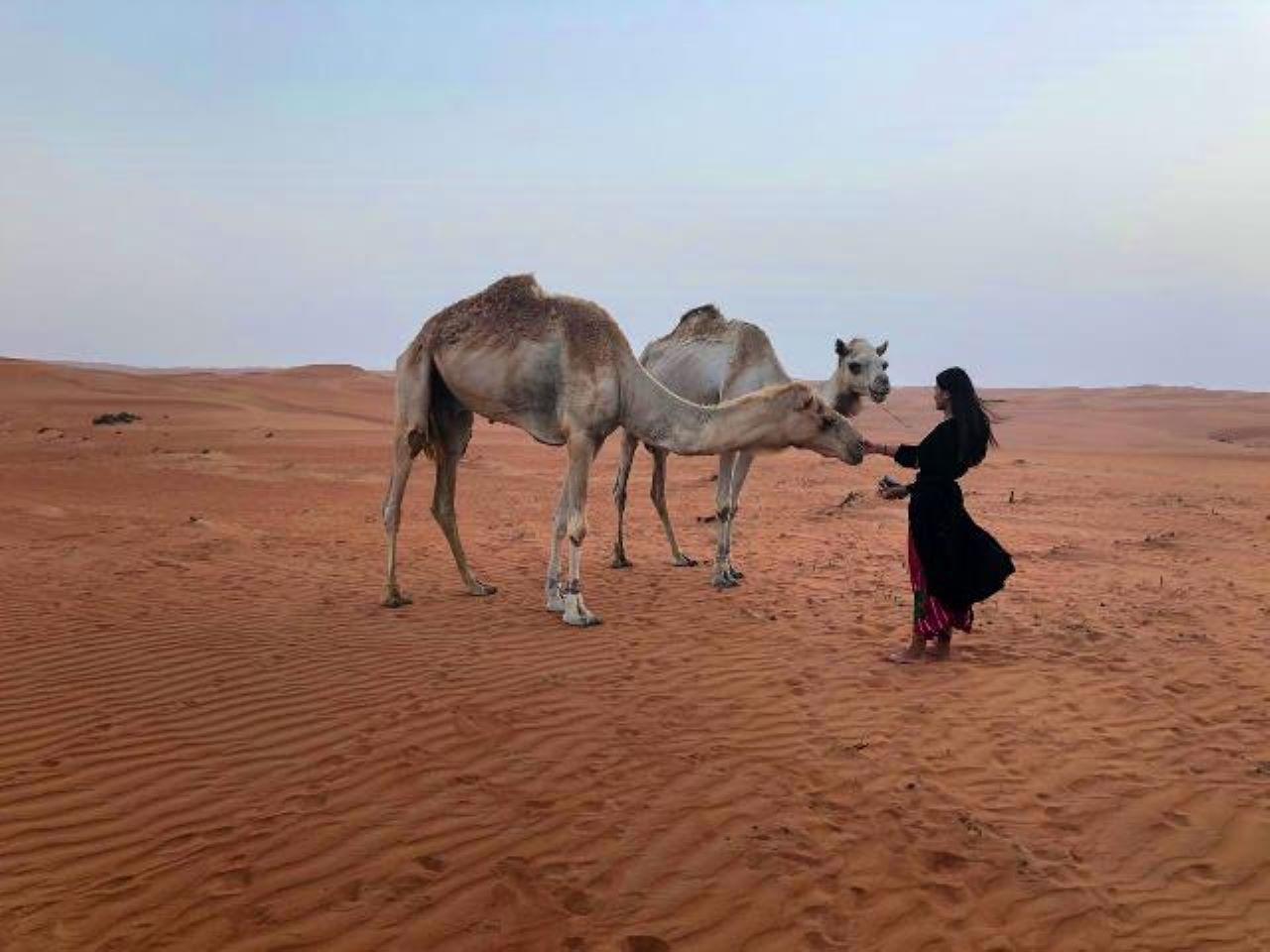
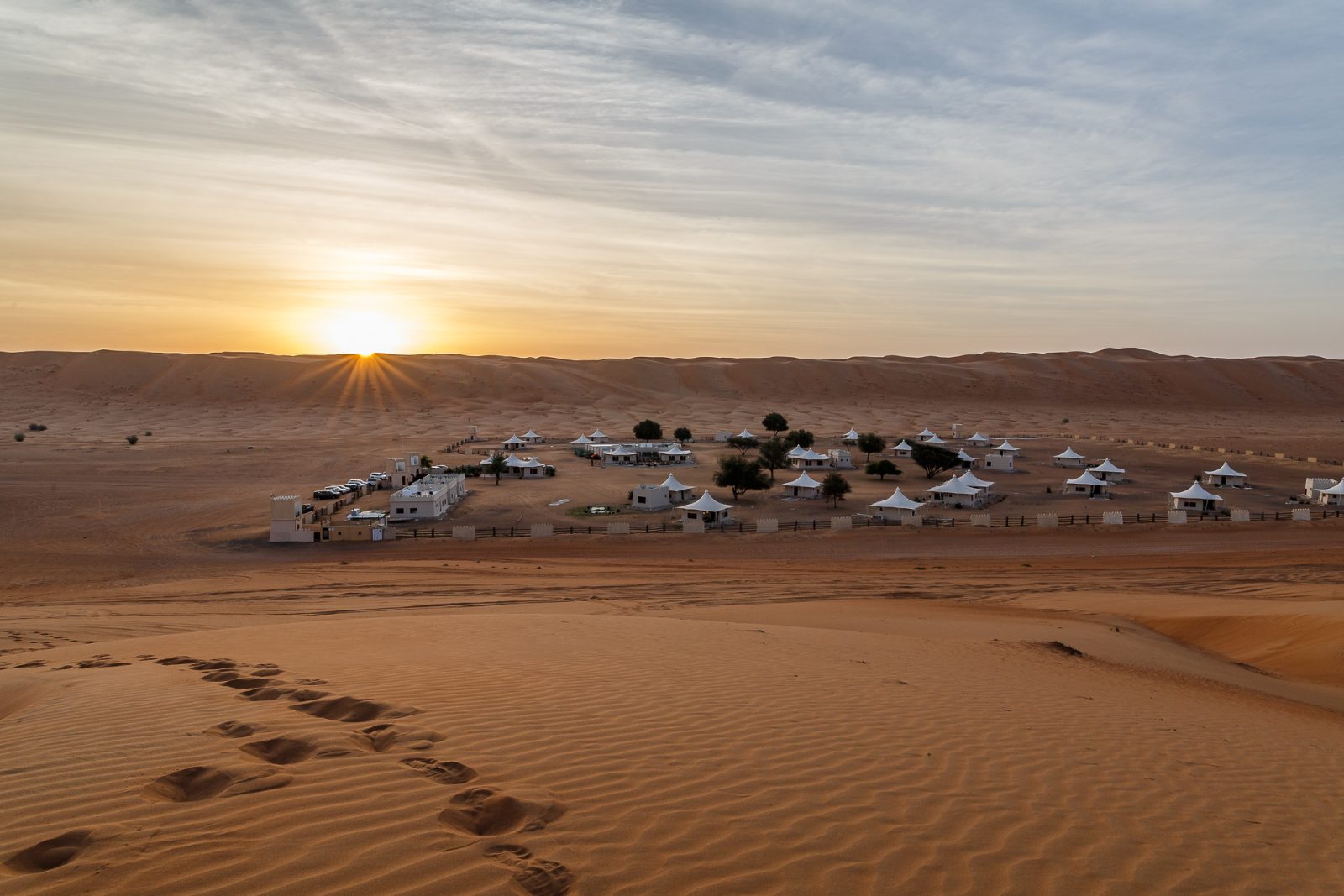
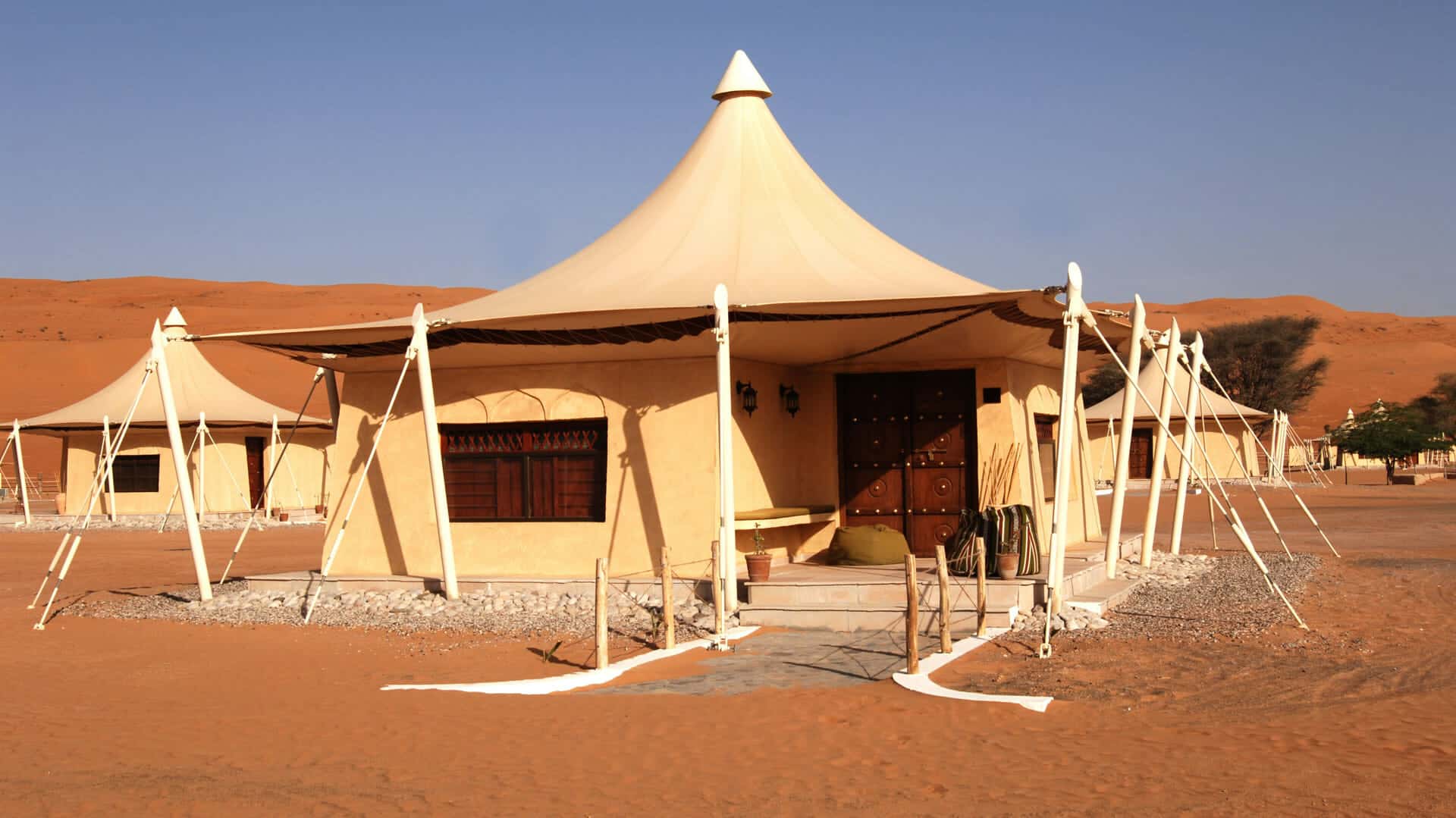
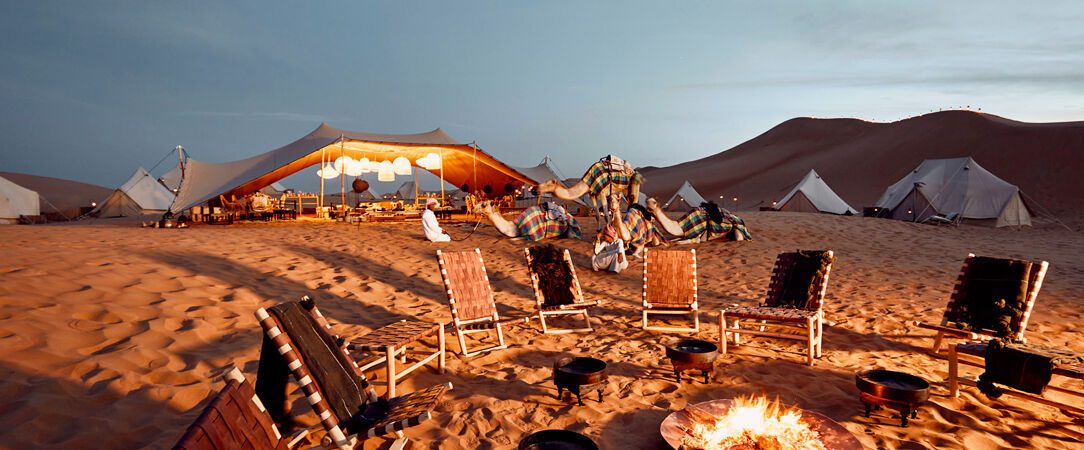
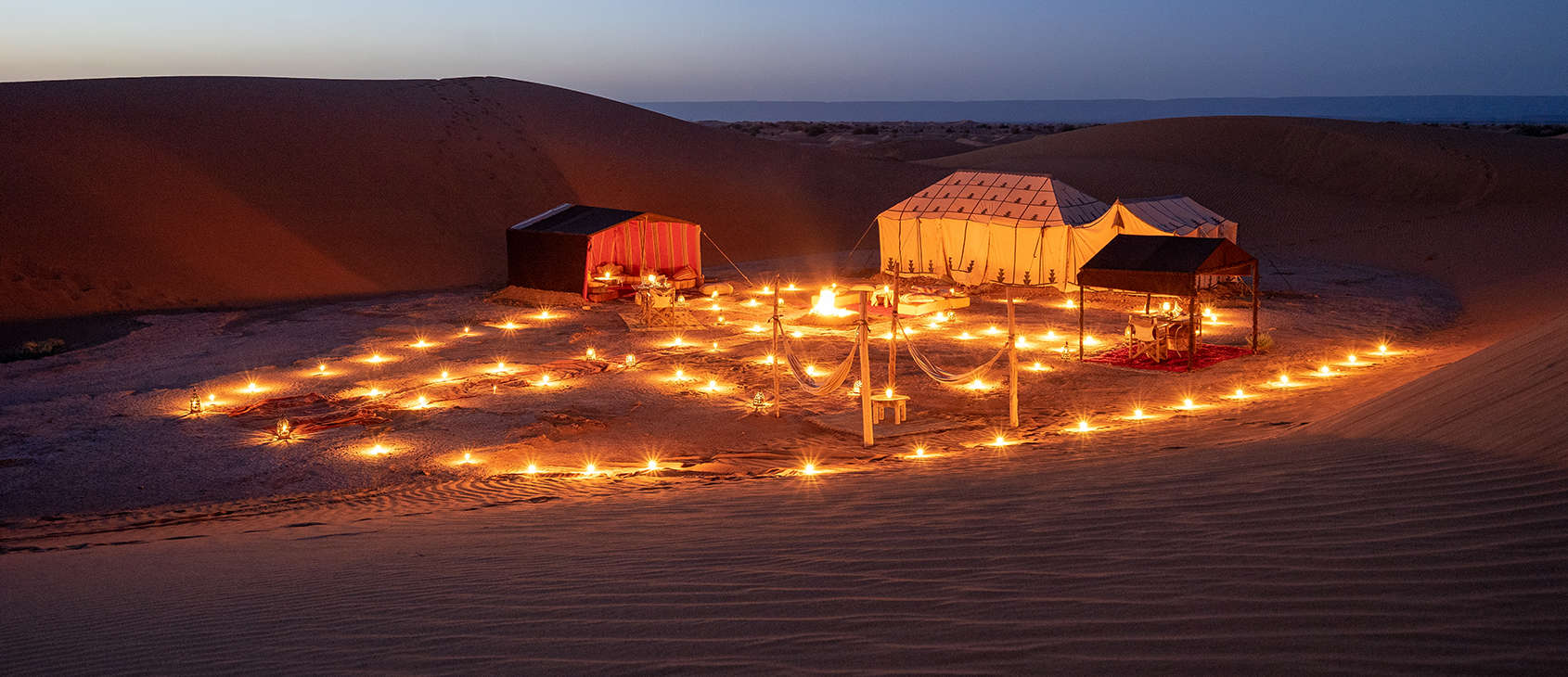
Today, a desert camp Oman experience offers structured access to this living landscape. Traditional goat-hair tents and modern permanent camps cluster near the desert's eastern edge, where families like the Al Badiya maintain hospitality traditions refined over generations. The camps serve as base points for dune-bashing circuits, camel treks at dawn when temperatures hover near 20°C, and evening gatherings around fire pits where qahwa coffee is poured from brass dallah pots. Most desert camp Oman tours pair the sand expanse with Wadi Bani Khalid, a spring-fed canyon 40 kilometers west where turquoise pools collect beneath date palms.
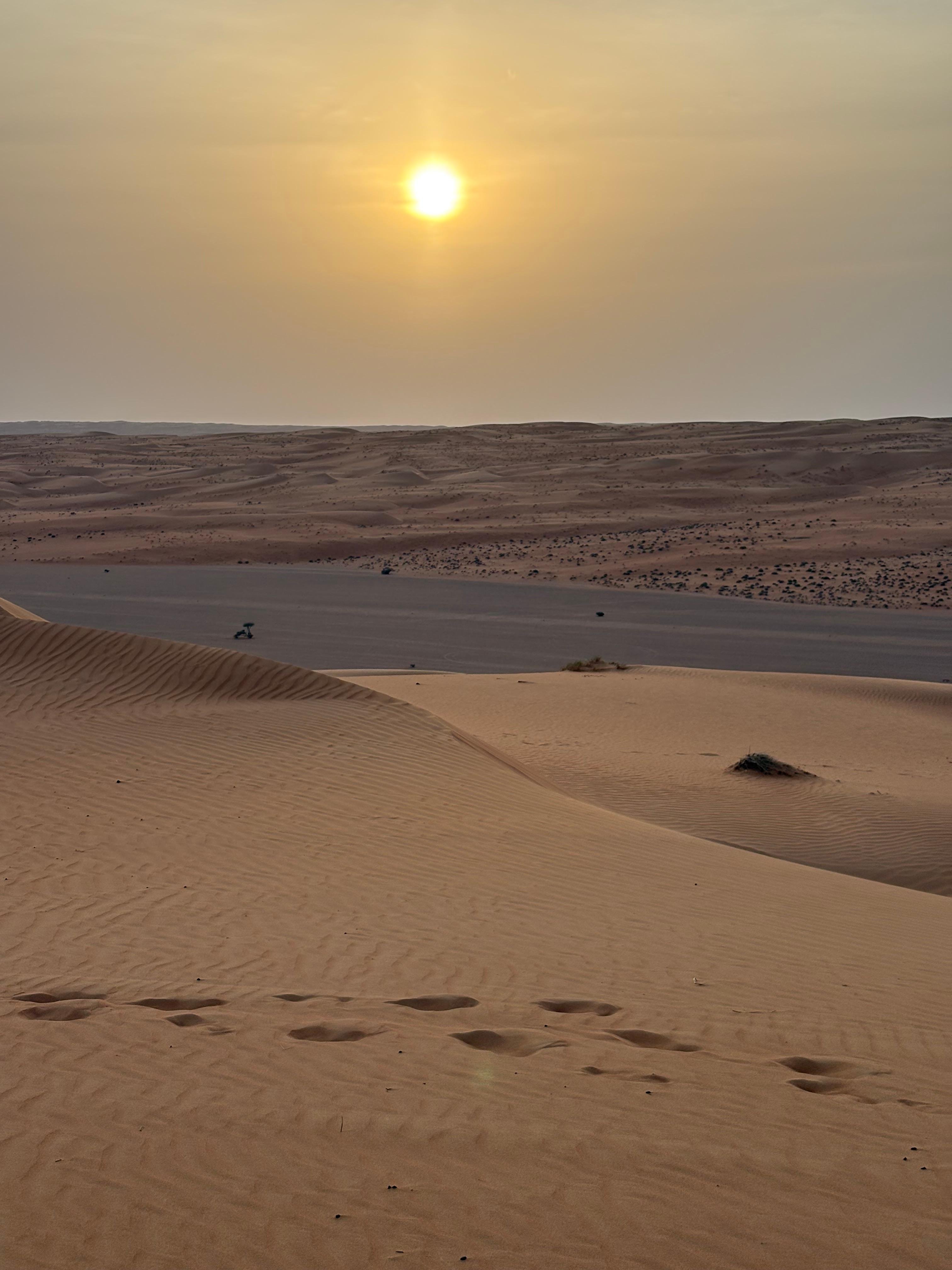
The dunes themselves shift constantly. Prevailing winds from the northeast carve crescent-shaped barchan formations and longitudinal ridges aligned parallel to airflow. During autumn months, when daytime heat moderates to 32°C, the sand surface cools rapidly after sunset, creating thermal contrasts that amplify star visibility. Bedouin guides read the terrain through subtle indicators: the angle of a ridge, the color gradient in a sand face, the presence of ghaf trees marking underground water.
Wahiba Sands remains one of Oman's most accessible desert ecosystems. The paved highway from Muscat reaches the desert perimeter in two hours, where 4x4 vehicles transition onto sand tracks leading to camp zones. The absence of entrance fees reflects the government's policy of open desert access, though permits are required for overnight stays beyond designated areas. For visitors, the desert camp Oman model balances infrastructure with isolation, offering measured comfort within a geography defined by scarcity and adaptation.

The Royal Geographical Society documented 16,000 invertebrate species and 200 plant varieties during the 1986 Wahiba Sands survey.
Modest clothing is recommended when visiting a desert camp oman to respect local Omani culture. Pack light, breathable fabrics and a scarf for sun protection.
Travel with soft-sided luggage as it is easier to transport in 4WD vehicles across the sand. Security is managed by individual operators within the Wahiba Sands region.
The golden hour at a desert camp oman provides the best lighting for landscape shots. Always ask permission before photographing local residents or private property.
Families are welcome, though children should be supervised constantly due to the vast nature of Wahiba Sands. Many desert camp oman operators provide family-sized tents.
Sand dunes present significant challenges for mobility aids. Some desert camp oman sites offer assistance, but the terrain is naturally uneven.
Most desert camp oman bookings include traditional Omani dinner and breakfast. Carry extra bottled water as heat remains a factor even in cooler months.
Opening hours
00:00–23:59
Address
Wahiba Sands (Sharqiyah Sands), Ash-Sharqiyah Region, Oman
Entry fee
0 OMR
Best arrival
06:00–10:00
Storage
Not available at desert camp oman
Region
Ash-Sharqiyah
Car · Variable · Rental costs apply
Rental 4WD is mandatory for reaching any desert camp oman site from the main road.
Taxi · 2h · Variable
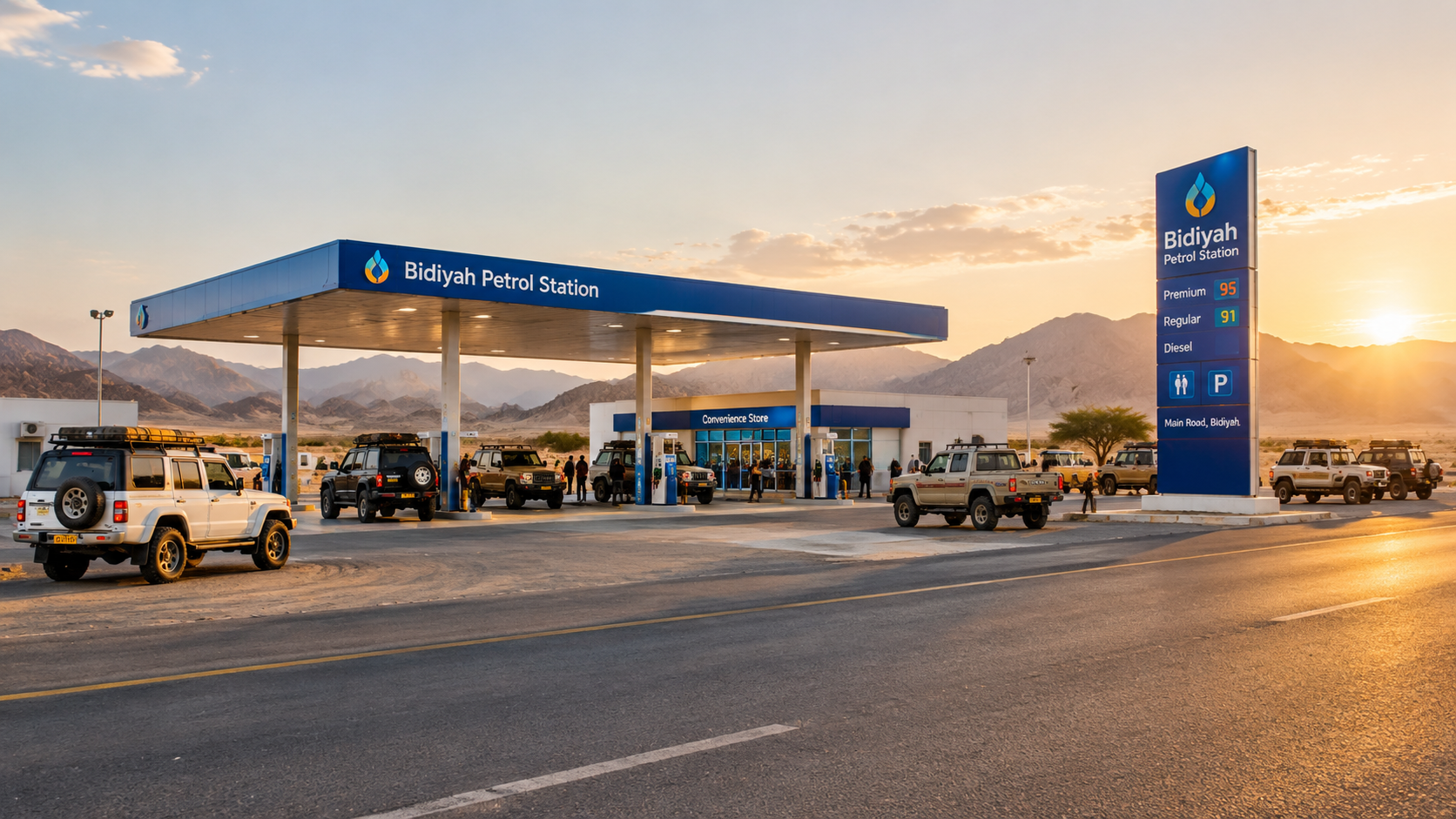
Hire a local driver from Bidiyah for a private desert camp oman tour.
Cancellations for a desert camp oman tour must be requested at least 48 hours in advance for a full refund. No fees apply as there is a 0 OMR entrance cost for the area.
Recommended time
Overnight (roughly 18-20 hours, afternoon to next morning)
Most travelers treat a desert camp oman stay as an overnight experience rather than a quick stop, arriving in the afternoon for dune time and sunset, then departing after breakfast. Add an hour if you want extra time bashing dunes by 4x4 before the light gets harsh, and subtract from the morning slot if you need to be back on the road early. Since entry is free and the sands are open around the clock, there is no queue at a gate, but camp check-in and vehicle transfers can bunch up if several groups land within the same short window. Booking a fixed desert camp oman tour with a set pickup time avoids most of that overlap.
Crowd levels through the day
Weather · crowds · average price — dots go green to amber to red as each metric rises.
September to November offers milder temperatures and clear skies for stargazing.
December to February is peak season with comfortable daytime highs and cool desert nights.
March to May features pleasant weather before the extreme heat of summer begins.
Deflate tires to 15-20 psi before driving on dunes. This prevents getting stranded in the soft sand of the Wahiba Sands region.
Follow tracks created by other vehicles. Always use a GPS device if you are self-driving to a desert camp oman.
The Wahiba Sands, renamed Sharqiyah Sands in 2013, remained largely unpenetrated by outsiders until the Royal Geographical Society mounted a comprehensive scientific expedition in 1985. That survey, spanning eight weeks and involving forty researchers, cataloged the dunes' ecology, hydrology, and the Bedouin tribes who had navigated the 12,500-square-kilometer expanse for centuries. The Bedu families—primarily from the Al-Wahibah tribe—survived through camel herding, date cultivation in hidden oases, and intricate knowledge of subterranean water sources. Their seasonal migrations followed rain patterns that shifted every few decades, and oral histories traced lineages back to the 17th century. Organized desert camp oman operations emerged in the mid-1990s when Muscat-based tour operators began negotiating access agreements with tribal councils. The first permanent tented camps appeared near Al-Wasil and Al-Mintarib in 1998, built with canvas structures that could withstand sandstorms exceeding 60 kilometers per hour. Infrastructure posed immediate challenges: water had to be trucked from coastal desalination plants, and photovoltaic panels were not yet economical at scale. By 2004, a dozen licensed camps operated within the Wahiba Sands, each hosting between twelve and thirty guests nightly. The 2008 global financial crisis forced closures, but recovery came swiftly as regional tourism expanded. The 2010s brought ecological concerns. Vehicle tracks scarred stabilized dunes, and waste management protocols lagged behind visitor growth. In 2016, Oman's Ministry of Tourism imposed zoning regulations that restricted camps to designated corridors and mandated solar power for new installations. Traditional Bedouin hospitality evolved into curated cultural experiences: camel treks, falconry demonstrations, and Arabic coffee rituals became standard inclusions in desert camp oman tours. Today, camps range from minimalist bivouacs to luxury lodges with air conditioning, though the core appeal—unobstructed starfields and the silent geometry of windswept ridges—remains unchanged since the 1985 expedition first documented this terrain for Western science.
Bedouin tribes migrate seasonally through the sands, herding camels and using traditional navigation methods.
Royal Geographical Society expedition maps the desert's ecology and Bedouin culture over eight weeks.
First permanent tented camps established near Al-Wasil with basic infrastructure and tribal access agreements.
Twelve licensed camps operate, hosting up to thirty guests nightly despite water and power challenges.
Wahiba Sands officially renamed Sharqiyah Sands by Omani authorities to reflect regional identity.
Ministry of Tourism imposes zoning rules and solar mandates to protect dune ecosystems from vehicle damage.
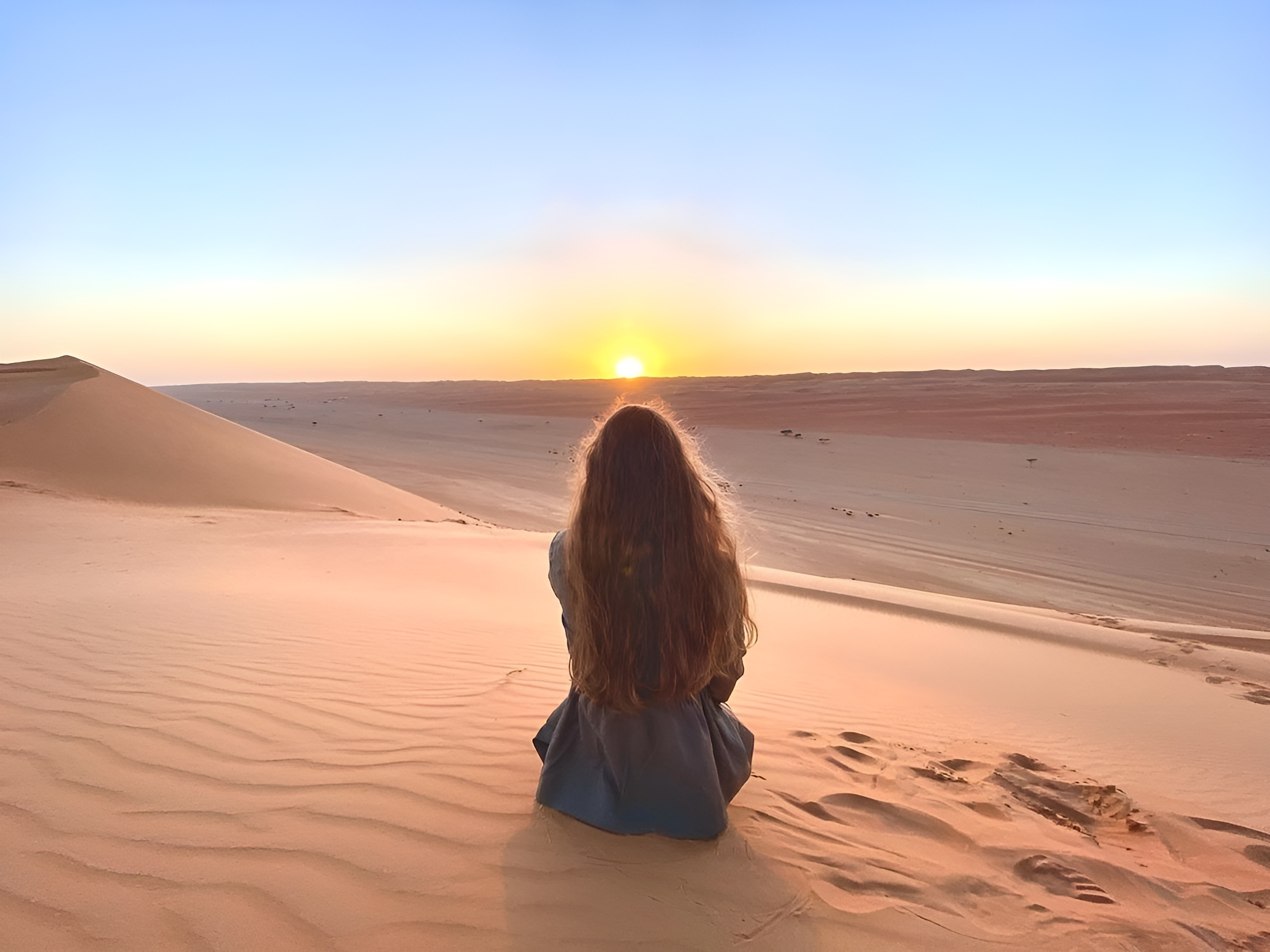
The point where the paved road gives way to open sand marks the classic first shot: tire tracks fanning into red dunes with the flat desert horizon beyond. Stand just off the transition point, low angle, to catch the color shift in the sand.
The tall dune rising directly behind most traditional camp sites gives the classic silhouette shot of tents against sweeping sand curves, especially at a desert camp oman where the ridge line is a short climb from the tent clusters. Climb barefoot for grip and shoot from the crest looking back down at the camp.
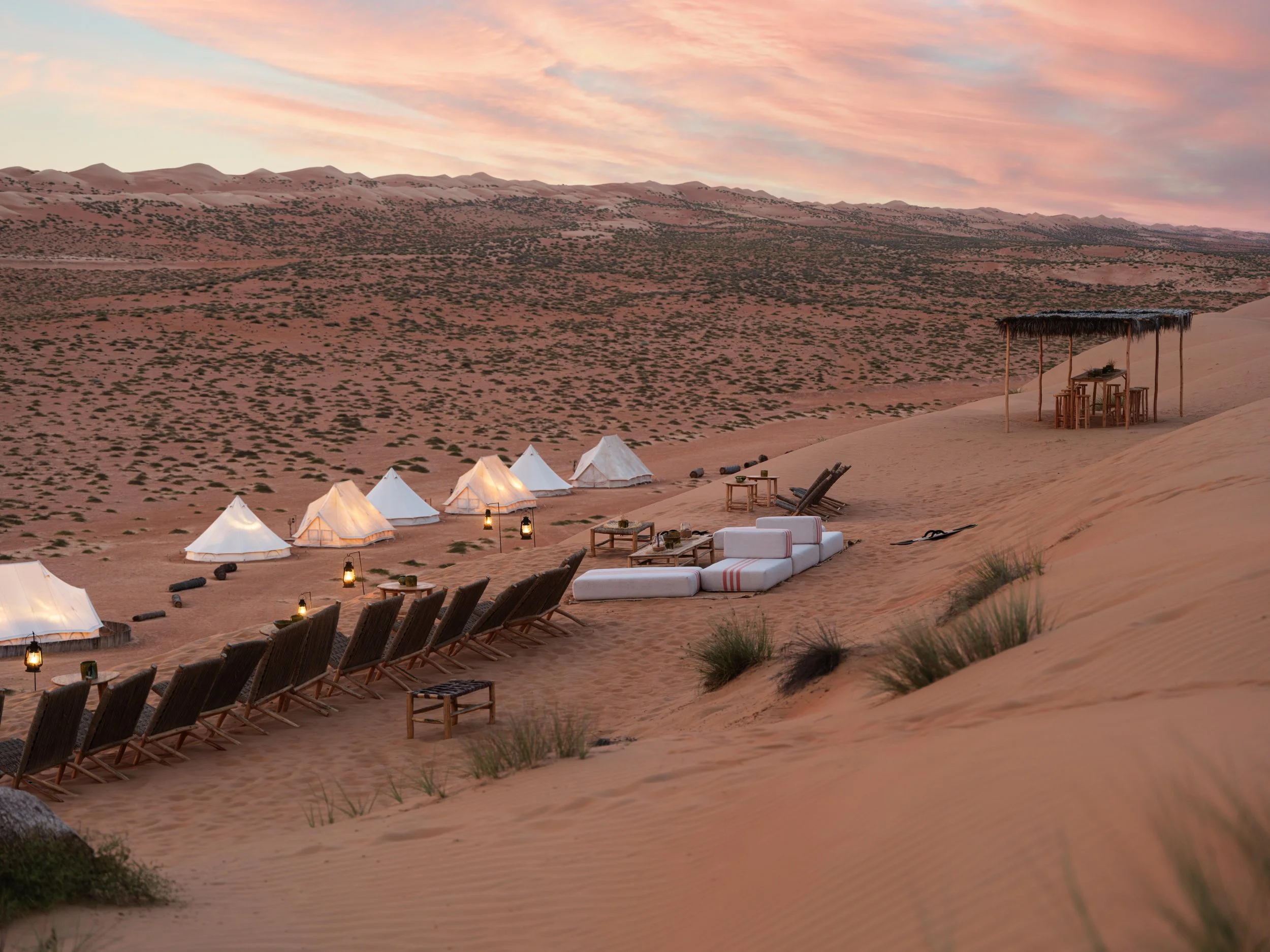
A prominent high dune used by most camps for evening viewing, offering uninterrupted views over rolling red-gold ridges without other camp structures in frame. Arrive before the light drops to secure a spot along the ridge crest.
The palm-frond and stone architecture of a traditional Bedouin-style camp, with low majlis seating and woven textiles, photographs well against the surrounding dunes. Shoot from the courtyard entrance looking toward the open desert for depth.
The winding 4x4 track between tall dune walls creates a natural corridor shot with strong shadow contrast on either side. Best captured from inside a moving vehicle or standing at a bend where the track curves.
Visiting a desert camp oman with children offers a unique opportunity to explore vast golden dunes and experience traditional bedouin hospitality. Planning for the shift in climate and terrain is essential for a smooth family adventure in the Sharqiyah Sands.
Standard strollers are ineffective on soft sand; opt for a carrier or backpack to keep your child comfortable during desert camp oman tours.
Children aged five and older typically manage the heat and sand play best, while younger toddlers require constant supervision near dunes.
Most remote locations lack standard changing stations, so pack a portable mat and supplies for your desert camp oman tour.
Schedule activities during cooler morning hours to avoid the midday sun, as there is little natural shade across the expansive landscape.
Bring familiar snacks and plenty of water, as desert camp oman tickets rarely cover specific dietary requests for picky eaters.
While rare, sandstorms can occur; monitor weather reports and confirm that your tour operator has an indoor shelter policy.
Dining options are concentrated within the established hospitality properties near your desert camp oman, as there are no external public restaurants in the dunes. Most visitors book half-board desert camp oman tours that include traditional Omani cuisine served buffet-style under the stars.
Offers authentic Omani dishes including shuwa and grilled meats for guests booking desert camp oman tickets. Service is communal and reflects local Bedouin hospitality traditions.
This venue provides a refined buffet experience featuring international and regional specialties for those on a desert camp oman tour. It is the primary option for evening meals in this sector of the sands.
Everything you need to know for your journey
There is a 0 OMR entrance fee for the desert area.
Wahiba Sands is accessible 24 hours a day, though 00:00–23:59 represents the formal operations.
The best arrival window is 06:00–10:00 for optimal lighting and cooler temperatures.
Yes, visiting a desert camp oman is standard for tourists when booking with reputable operators.
No, there are no specific tickets needed for the desert area itself.
Pack sun protection, modest clothing, and water for your desert camp oman stay.
Yes, children are welcome, though desert camp oman facilities vary by operator.
Yes, most stays include traditional meals as part of the desert camp oman tour package.
Access is via 4WD vehicle through Bidiyah to reach your specific desert camp oman.
Check individual booking terms; most desert camp oman tours allow cancellations 48 hours prior.
Large wadi with emerald pools and caves.
Historic lighthouse overlooking the sea in Sur.
Local market for dates and traditional crafts.
High-end tents with modern amenities.
Sustainable and remote camping experience.
Authentic traditional Bedouin style stay.
Join thousands of happy travelers who have discovered this incredible experience
Book Your Experience Now